

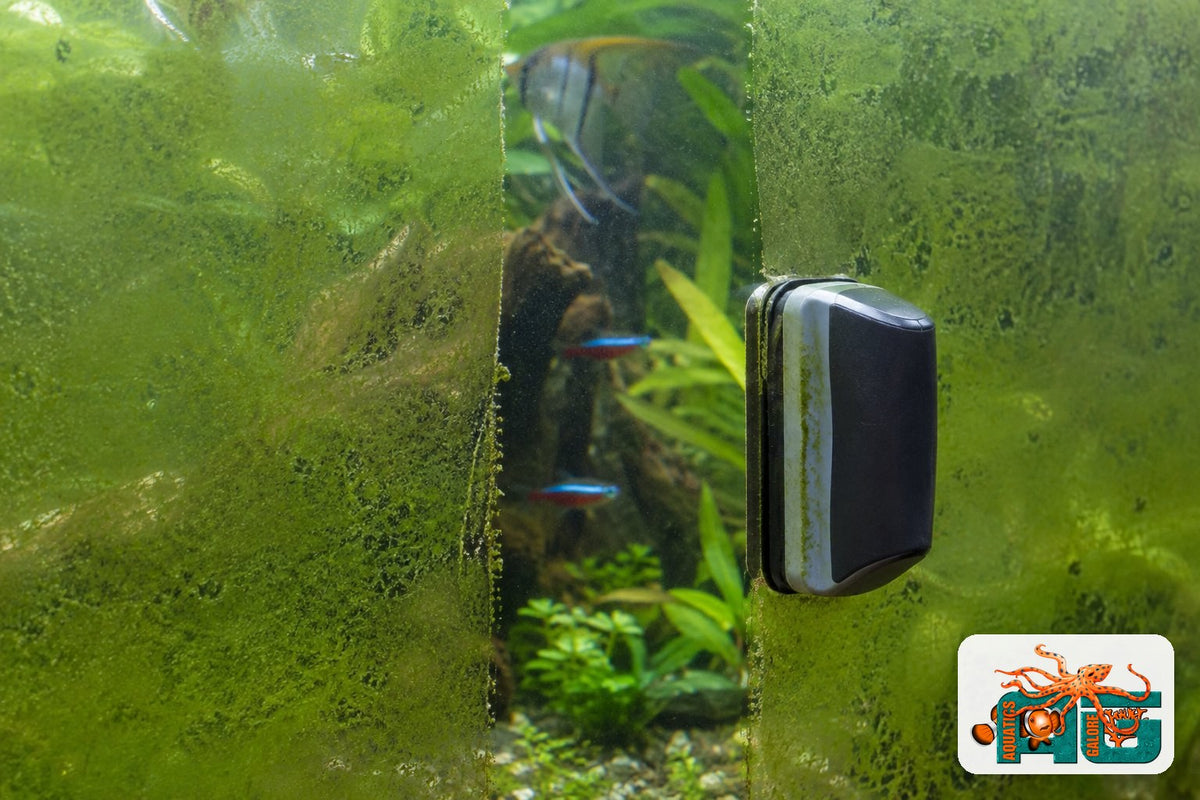
A little algae is normal in any healthy aquarium. When it starts taking over, it’s a sign that light and nutrients are out of balance. Fix the cause, and the algae follows.
1. Why algae grows
Algae needs light and nutrients. Too much of either, from lights left on too long, sunlight hitting the tank, overfeeding, or nitrate and phosphate building up between water changes, gives it the upper hand.
2. Get the light right
Keep the tank out of direct sunlight, and run your lights about 8 to 10 hours a day on a timer. See our guide to aquarium lighting.
3. Cut the nutrients
Feed only what your fish eat in a couple of minutes, and keep up with water changes. Test for nitrate and phosphate. Phosphate removal media can help, and saltwater tanks should be topped off with RO/DI water, which has no added nutrients.
4. Bring in some help
In freshwater tanks, live plants compete with algae for nutrients. Algae-eating snails, shrimp or fish suited to your tank help keep surfaces clean, and saltwater tanks benefit from a clean-up crew.
5. Clean what’s there
Wipe the glass with a magnetic cleaner or scraper, and remove what you can from rocks and decorations during water changes.
6. Common types
Brown dusty film (diatoms) is common in new tanks and usually fades on its own. Green spots or film on the glass is normal and easy to wipe off. Long hair algae and red or dark slime usually mean too many nutrients or too much light.
7. Go easy on chemicals
Algae-killing treatments don’t fix the cause, and some can harm plants, invertebrates or corals. Use them only as a last resort, and ask us first.
Questions along the way? Call (937) 679-3474 or stop by the store.


